
Stop 3 Interior Decoration
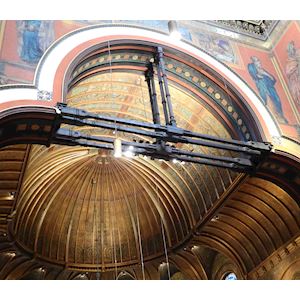
Look at the walls around you. [pause] and up at the ceiling. Visitors are often surprised by the amount of color and the density of detailed decorative painting they see around and above them. This intense visual excitement is balanced by the surrounding framework of warm, black walnut woodwork that creates an almost cozy ambiance––it’s as if the room put its arm around you in welcome. This innovative decorative program and the feeling it gives were intentional. The interior decoration was conceived by the architect, Richardson, and the rector, Brooks, along with the artist who designed and directed its creation, John LaFarge. LaFarge was trained as a painter. He studied in France and later with the American artist William Morris Hunt. Richardson, had known LaFarge and his work and felt confident that he would be the ideal choice for this crucial phase of the project. Facing the altar, look at the upper wall to your left, where you’ll see LaFarge’s mural Christ and the Woman of Samaria. Now look at the upper wall to your right, to where you will see of the Visit of Nicodemus to Christ. . Notice how open the room is. One of the key design requirements set forth by the church building committee was that the interior needed to be free of columns. Why do you suppose they insisted on that? Well, because Phillips Brooks’ preaching was very important to his followers, any obstructed views had to be minimized. Richardson based his design on the shape of a Greek cross –– a cross with four equal sides –– which created an open, auditorium-like room with clear sightlines, good acoustics and a sense of unity. To find out more about the design requirements Trinity insisted on, press the A button on your player, now. Another design requirement was that the church should have balconies. As you look around you’ll see three of them. Why would the church have insisted on this additional seating? Who do you think would sit there? Well, at that time, the way Trinity (and most other churches) supported themselves financially was through the sale or rental of pews –– notice the small brass number plates. Only the pew owners could sit in these pews. To make Trinity open and accessible to all, these balconies were available for free seating –– anyone such as people of limited means, travelers, and students could sit in these seats. And, they’re very good seats!
Trinity Church in the City of Boston
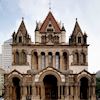
Hello and welcome to Trinity Church in the City of Boston. Trinity is a National Historic Landmark, a designation by the United States Park Services that marks it's significance not only to Boston, but also to the entire nation and one of the true gems of nineteenth-century American architecture. Here you will see why The American Institute Of Architects has ranked Trinity Church among the top ten buildings in the country.
- 206 Clarendon St.
- Boston United States
- 617-536-0944
- www.trinitychurchboston.org
